Preparing SoCal Homes for Late Fall and Winter
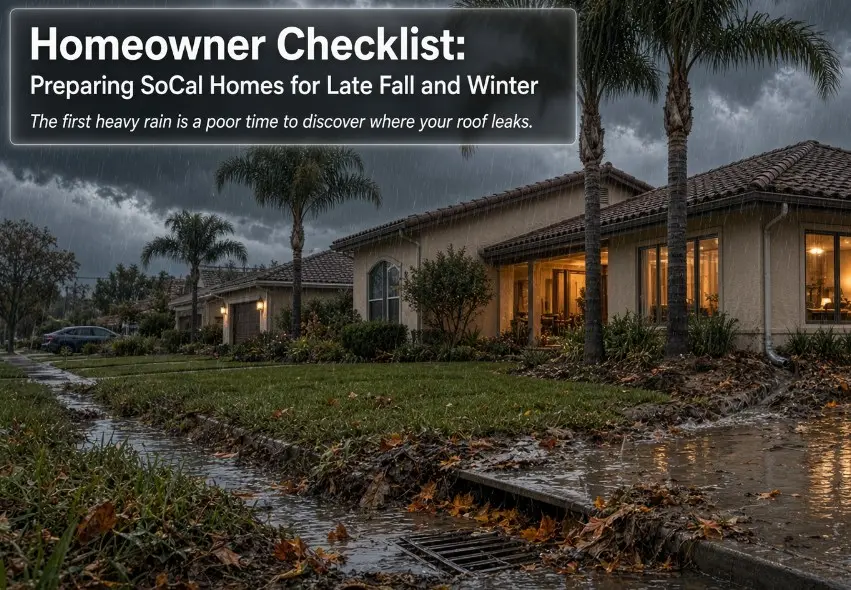
Homeowner Checklist: Preparing SoCal Homes for Late Fall and Winter
The first heavy rain is a poor time to discover where your roof leaks—or where your downspout sends water.
Southern California homes can go months without a meaningful test of their drainage systems. Dust and leaves collect in gutters, a roof repair gets postponed, and an outdoor drain quietly disappears under landscaping. Then a strong storm arrives, and water finds the weak point.
For homeowners north and south of Ventura Boulevard, late fall preparation starts with one question: Where will the water go? Los Angeles County advises residents to clean gutters, downspouts, and storm drains and repair roof leaks before storms arrive. Hillside properties need an additional look at slopes and drainage paths.ready.lacounty+1
1. Check the roof’s weak points
You do not need to climb onto the roof to spot reasons for a professional inspection. From the ground, look for displaced roofing material, debris collecting in roof valleys, or staining beneath eaves. Indoors, note any ceiling discoloration or musty smell that appeared after a previous rain.
Ask a qualified roofer to pay particular attention to flashing—the material that seals transitions around chimneys, skylights, vents, and places where a roof meets a wall. Also have them check roof drains or scuppers if your home has a low-slope section. These details are easy to forget during dry weather and difficult to repair in the middle of a storm.pixelarchllc+1
If you already know about a leak, schedule the repair now rather than waiting to see whether it returns.
2. Clear gutters—and follow the downspouts
A clean gutter is only half a working drainage system. Remove leaves and debris, then check that each downspout is connected, unobstructed, and carrying water to an appropriate discharge point. Look for staining beneath the roofline or soil erosion where a downspout ends; either can signal that water has been overflowing or concentrating in the wrong place.ready.lacounty+1
Next, walk the route water takes across the property. Clear leaves from area-drain grates and catch basins. If you can safely test a drain with a garden hose, confirm that water reaches its intended outlet rather than backing up or pooling beside the house. Do not redirect runoff onto a neighbor’s property or toward the top of a slope; get professional advice if the drainage route is unclear.latimes+1
3. Give hillside properties a closer inspection
For homes in the Sherman Oaks and Encino hills, storm preparation extends beyond the roofline. Walk accessible areas of the property before the ground is wet. Look for blocked slope drains, new cracks in soil or hardscape, areas where water has carved a channel, and changes in a retaining wall’s appearance. After rain, watch for muddy seepage, new bulging, or water collecting where it has not collected before. Los Angeles County recommends monitoring slopes for cracks, holes, and other changes and consulting a soil engineer or engineering geologist when land movement is a concern.ready.lacounty
A retaining wall is not just a landscape feature. If it is leaning, cracking, or showing signs of water pressure behind it, have a qualified professional evaluate it. Avoid a quick fix that merely moves concentrated water elsewhere on the hillside; drainage changes can affect neighboring properties, too.rcdsantacruz+1
Properties near steep canyons or recent burn areas call for extra vigilance. Sign up for local emergency alerts, know how you would leave if conditions deteriorate, and follow official instructions during a storm.ready.lacounty+1
4. Service the heating and cooling system
Rain may get the attention, but fall’s temperature swings are a good reminder to test the HVAC system before you rely on it. Run the heat briefly, note unusual sounds or odors, and schedule service if it is not performing as expected.
Check the air filter monthly during heavy-use periods and replace it when dirty; ENERGY STAR recommends changing it at least every three months and arranging a yearly HVAC tune-up. If you have an outdoor unit, keep the surrounding area clear of leaves and debris without opening or servicing the equipment yourself.energystar+1
For homes with fuel-burning equipment, test carbon monoxide alarms as part of the seasonal check.callthegeneral
A one-weekend plan
Start with the tasks you can safely do yourself: photograph any existing stains or cracks, clear accessible drain grates, check where downspouts end, replace the HVAC filter, and test your heating system. Then book the right professional for anything involving the roof, a blocked underground drain, or a questionable slope or retaining wall.
Finally, repeat a short walk-through during or just after the first substantial rain—only when it is safe to do so. A working drainage plan is one you have watched work. If water pools against the house, a downspout overflows, or a hillside changes appearance, address it promptly rather than hoping the next storm will be lighter.latimes+1
The goal is not to storm-proof every Southern California home. It is to find the small, visible problems while there is still time to fix them—and to know when a problem needs a professional before the weather makes the decision for you.
Categories
Recent Posts








GET MORE INFORMATION