1031 Exchanges in Southern California
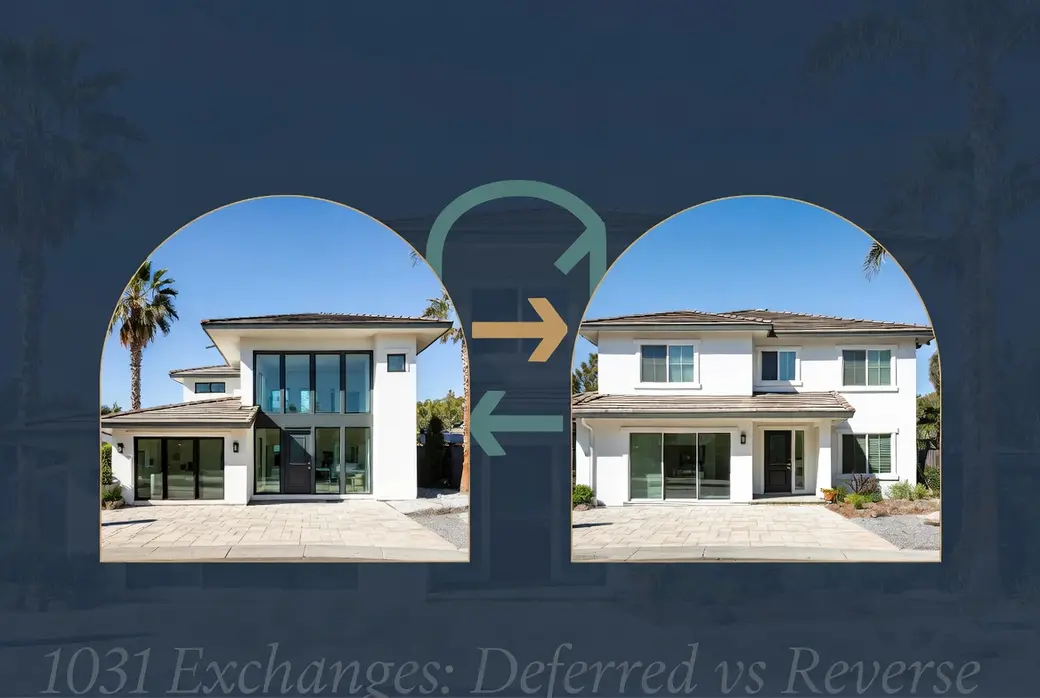
1031 Exchanges in Southern California: The Two Main Ways to Defer Capital Gains Taxes
If you own investment real estate in the Greater Los Angeles area and are considering a sale, a 1031 exchange can be one of the most powerful tools available to defer capital gains taxes and keep more of your equity working for you.
As a luxury real estate broker with Rim Property Group serving clients across the San Fernando Valley, Beverly Hills, and broader Southern California, I frequently help investors navigate these transactions. One of the most common questions I hear is: “Can I sell first and then buy, or do I have to buy first?”
The answer is that there are two primary ways to structure a 1031 exchange: the Deferred Exchange and the Reverse Exchange. Both can achieve excellent tax-deferral results when done correctly, but they serve different situations.
What Is a 1031 Exchange?
A Section 1031 exchange (also called a like-kind exchange) allows you to sell investment or business real estate and reinvest the proceeds into another like-kind property while deferring capital gains taxes. It’s not a tax-free transaction — the tax is postponed until you eventually sell the replacement property without exchanging again.
Both the property you sell (relinquished property) and the one you acquire (replacement property) must be held for investment or business use, and they must be like-kind (most U.S. real estate qualifies).
Important: You cannot simply sell a property and buy another on your own. You must work with a Qualified Intermediary (QI) who holds the proceeds and facilitates the exchange according to strict IRS rules.
1. The Deferred Exchange (Sell First, Then Buy)
This is the most common and straightforward structure.
How it works:
- You sell your relinquished property first.
- The proceeds go directly to your Qualified Intermediary.
- You then identify and purchase a replacement property within the required timelines.
Key Timelines (these are strict — missing them usually disqualifies the exchange):
- 45-Day Identification Period: From the date you close on the sale of your relinquished property, you have 45 calendar days to identify potential replacement properties in writing to your QI. You can identify up to 3 properties of any value (the “3-property rule”), or more under the 200% or 95% rules.
- 180-Day Exchange Period: You must close on and take ownership of the replacement property by the earlier of:
- 180 calendar days after the sale of your relinquished property, or
- The due date of your tax return for the year you sold the property (including extensions).
Best for: Investors who have a buyer lined up or want to sell first and then take time to find the right replacement property.
2. The Reverse Exchange (Buy First, Then Sell)
Sometimes the perfect replacement property becomes available before you’ve sold your current investment property. In these cases, a Reverse Exchange can be the solution.
How it works:
- You (through an Exchange Accommodation Titleholder or EAT arranged by your QI) acquire the replacement property first.
- You then sell your relinquished property within the allowed timelines.
- The EAT temporarily “parks” the replacement property so you don’t have constructive receipt of funds or violate IRS rules.
Key Timelines:
- You generally have 45 days from the acquisition of the replacement property to identify the relinquished property you will sell.
- You have 180 days from the date you acquired the replacement property to complete the sale of the relinquished property.
Best for: Situations where you’ve found an ideal replacement property and don’t want to risk losing it while waiting to sell your current one. Reverse exchanges are more complex and typically more expensive than deferred exchanges.
Quick Comparison
| Aspect | Deferred Exchange (Sell First) | Reverse Exchange (Buy First) |
|---|---|---|
| Order of Transactions | Sell → Buy | Buy → Sell |
| Most Common? | Yes | Less common |
| Complexity & Cost | Lower | Higher |
| Best When | You have time to find a replacement | You’ve already found the ideal property |
| Timeline Starts | When you sell | When you buy the replacement |
Important Rules for Any 1031 Exchange
- You must use a Qualified Intermediary.
- The properties must be like-kind real estate held for investment or business use.
- For maximum tax deferral, you should generally acquire a property of equal or greater value and reinvest all proceeds.
- Deadlines are absolute — they cannot be extended for personal hardship.
- As of 2026, 1031 exchanges for real property remain fully available with no federal caps.
Should You Do a Deferred or Reverse Exchange?
It depends on your specific situation:
- Do you already have a strong buyer for your current property? → Deferred Exchange is usually best.
- Have you found an exceptional replacement property you don’t want to lose? → Consider a Reverse Exchange.
Many investors in the competitive Southern California market use a combination of both strategies over time as part of a larger portfolio strategy.
Ready to Explore a 1031 Exchange?
Executing a successful 1031 exchange requires careful planning, the right team, and strict adherence to timelines. Working with an experienced real estate professional who understands these transactions — along with a reputable Qualified Intermediary — can make a significant difference.
If you’re considering selling an investment property in Encino, Woodland Hills, Beverly Hills, or anywhere in the Greater Los Angeles area and want to discuss whether a deferred or reverse 1031 exchange makes sense for your goals, I’d be happy to help.
Contact me, Herb Rim, or the team at Rim Property Group today. We can walk you through your options, connect you with trusted Qualified Intermediaries, and help you create a strategy that protects your equity and supports your long-term investment objectives.
Reach out via our website or give us a call to schedule a conversation. Let’s make your next move a smart one.
This article is for informational purposes only and does not constitute tax, legal, or financial advice. Always consult with a qualified tax professional and attorney before engaging in a 1031 exchange.
Categories
Recent Posts









GET MORE INFORMATION