Why Homes Are Taking Longer to Sell in Los Angeles
Mid Summer 2026:
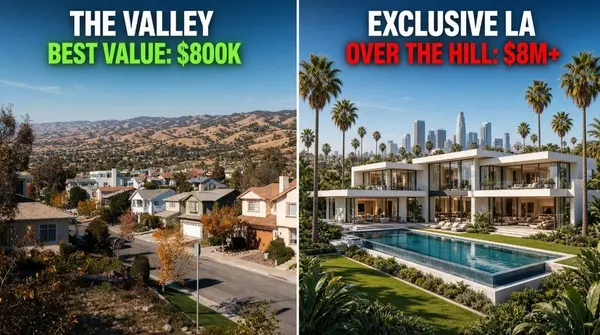
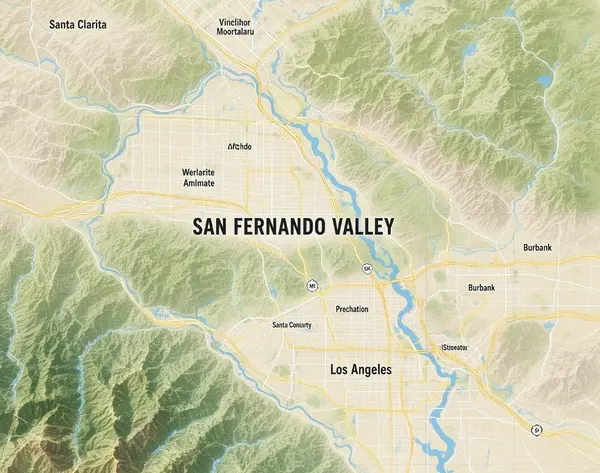
Across the San Fernando Valley and the Westside, from Encino and Studio City to Beverly Hills, Bel Air, Santa Monica, and Brentwood homes are generally taking longer to sell than they did during the ultra-competitive 2021–2022 period.
That does not automatically mean prices are collapsing or that demand has disappeared.
It means buyers have more choices, more payment sensitivity, and more willingness to walk away from a home that feels overpriced, dated, or difficult to finance. Today, the market is less about simply getting listed and more about giving buyers a compelling reason to act now.
Recent market snapshots support that shift. Redfin reports roughly 48 days on market across Los Angeles in its recent reporting period, with materially different results by neighborhood and property segment. In higher-end markets such as Beverly Hills, Bel Air, and Brentwood, the buyer pool narrows as price rises - so the consequences of overpricing or poor presentation become more pronounced.
Here is what is really happening, broken down by the price categories that matter in today’s market.
Under $1 Million: The “Payment-Sensitive” Market
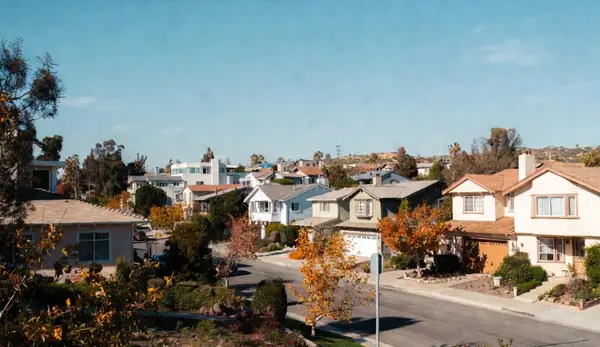
In much of the San Fernando Valley, this range includes condos, townhomes, smaller single-family homes, and homes in neighborhoods where buyers are especially focused on affordability.
This segment can still move relatively well because it attracts the largest pool of potential buyers. But those buyers are very payment-conscious. Higher mortgage rates, HOA dues, insurance, property taxes, and repair costs can quickly make a property feel unaffordable—even when the asking price appears reasonable.
Homes in this category tend to sit longer when:
-
The property needs visible repairs or updating
-
HOA dues are high relative to the home’s price
-
The listing is priced as though buyers are not financing
-
The seller has not addressed inspection concerns in advance
-
Comparable homes offer better condition, parking, outdoor space, or layout
For this buyer, a $20,000 price difference can matter—but a seller credit or mortgage-rate buydown may matter even more. The winning strategy is often not just “price it lower.” It is to make the monthly payment and total ownership cost feel manageable.
Recent San Fernando market reporting shows a more measured pace than prior years, with homes taking far longer to sell than the frenzy period.
$1 Million to $2 Million: The Valley’s Most Competitive—but Selective—Move-Up Segment
This is the core move-up range for much of the Valley: Encino, Sherman Oaks, Studio City, Tarzana, Woodland Hills, West Hills, Northridge, Porter Ranch, Granada Hills, and other neighborhoods between the 118 and 10 Freeways.
This price range includes a wide mix of homes:
-
Updated family homes
-
Properties with ADU potential
-
Homes with usable yards
-
Smaller homes in premium locations
-
Larger but dated homes in more affordable pockets
-
Entry-level luxury homes in areas such as Encino, Sherman Oaks, and Studio City
Demand is still meaningful here—but buyers are comparing carefully.
A buyer spending $1.4 million to $1.8 million is no longer asking only, “Can I afford this?” They are asking:
-
Does this home feel turnkey for the price?
-
Is the floor plan functional for my family?
-
Does the home have deferred maintenance?
-
Is there enough outdoor space, parking, storage, or privacy?
-
How does this compare with the other three homes we toured this weekend?
A renovated, correctly priced home can still create urgency. A dated property listed at a remodeled-home price may simply sit.
This is why many sellers are surprised when a home receives plenty of online views but few serious offers. The issue is often not exposure. It is that buyers see a mismatch between price, condition, and alternatives.
$2 Million to $4 Million: The “Expectation Gap” Market
Between $2 million and $4 million, especially in Encino, Sherman Oaks, Studio City, Woodland Hills, Brentwood, Santa Monica, and parts of Beverly Hills, buyers expect a more complete experience.
At this level, buyers are evaluating more than square footage. They expect a home to deliver on lifestyle:
-
Quality design and finishes
-
Strong curb appeal and landscaping
-
Functional indoor-outdoor flow
-
Privacy and usable outdoor areas
-
Good natural light
-
Updated major systems
-
A location that supports the home’s price
-
A move-in-ready presentation
This is where sellers most often get caught by the “my neighbor listed at…” trap. An active listing is not proof of value. It is only proof of what another seller hopes to receive.
In Brentwood, recent Redfin data reflects a longer, more rational selling environment than the peak years, with the pace varying sharply by home type, condition, and location. Redfin Brentwood Market Data
Santa Monica remains desirable because of its coastal lifestyle and proximity to employment centers, but buyers can be especially discerning regarding parking, condition, HOA costs for attached properties, lot utility, and coastal-location tradeoffs.
In this category, homes are taking longer to sell because buyers are no longer willing to pay a premium simply for an address. They want a property that feels materially better than the competition.
$4 Million to $8 Million: The Luxury Buyer Has Options
This is where the market becomes more visibly segmented.
In Beverly Hills, upper-end Encino, Brentwood, Santa Monica, and select Valley estate pockets, buyers at this level have the financial ability to wait. They are not always driven by a lease expiration, a first-time purchase deadline, or the fear of missing out.
They may be deciding between:
-
Beverly Hills versus Brentwood
-
Bel Air versus Beverly Hills Post Office
-
Santa Monica versus Pacific Palisades or the Valley
-
A newly built home versus a traditional property with character
-
A move-in-ready home versus a substantial renovation opportunity
The result is more deliberation and a longer decision cycle.
Beverly Hills remains a globally recognized luxury market, but even there, sellers need to compete for a smaller and more sophisticated buyer audience. Recent Redfin reporting indicates a substantially more measured market pace than the former rush-to-buy environment.
At this price level, the market often separates into two groups:
-
Turnkey, design-forward, well-located homes: These can still attract strong attention and sell relatively efficiently.
-
Dated, compromised, or aggressively priced homes: These can remain available for months, even in prestigious neighborhoods.
The key distinction is that luxury buyers do not necessarily perceive a dated home as an “opportunity.” They may perceive it as a future project, construction disruption, uncertainty, and cost.
$8 Million and Above: The Ultra-Luxury Market Is Property-Specific
In Bel Air, Beverly Hills, Brentwood, and certain estate-level properties throughout Los Angeles, there is no broad market statistic that can accurately price an individual home.
At $8 million, $15 million, or $30 million and above, every property becomes its own category. Buyer demand depends on factors such as:
-
View quality
-
Privacy and security
-
Architecture and provenance
-
Lot size and usable grounds
-
Street and location within the neighborhood
-
New construction versus dated construction
-
Guest house, gym, theater, wellness amenities, or other lifestyle features
-
Whether the home feels unique enough to justify its premium
Bel Air and Beverly Crest, for example, generally show a longer selling cycle than the broader Los Angeles market. That reflects the narrow buyer pool, the complexity of estate properties, and the gap between sellers’ aspirational pricing and buyers’ willingness to pay for a specific asset.
In ultra-luxury, a home can take longer to sell without anything being “wrong” with it. But an unrealistic price can dramatically extend that timeline because there may only be a handful of qualified buyers worldwide for a particular estate.
Why Homes Are Taking Longer Overall
Regardless of neighborhood or price point, the underlying reasons are similar:
-
Buyers have more choices than they had during the inventory-starved peak years.
-
Mortgage rates make buyers more payment-sensitive, particularly below $2 million.
-
Buyers are more cautious about deferred maintenance, renovation costs, and inspection surprises.
-
Aspirational pricing is easier to spot when buyers can compare several viable alternatives.
-
The higher the price, the smaller the buyer pool.
-
Luxury buyers are patient and often have the ability to wait for the exact property they want.
What Sellers Should Take From This
The market is not rewarding sellers merely because they are in a desirable neighborhood. It is rewarding sellers who are the best value among the homes currently competing for the same buyer.
That means:
-
Price from closed and pending comparable sales—not active-listing wishes.
-
Prepare the home before launch, including repairs, paint, landscaping, staging, and professional media.
-
Identify potential buyer objections before they become negotiation issues.
-
Consider whether a seller credit or rate buydown improves the buyer’s payment enough to create stronger demand.
-
Review showing feedback quickly and respond before a listing becomes stale.
-
At higher price points, lead with the home’s specific story and differentiators—not simply its address or square footage.
The real question is not, “Why is my home taking longer to sell?”
It is: “At this price, in this condition, compared with the homes buyers can choose today, is my property clearly the best available option?”
Categories
Recent Posts






GET MORE INFORMATION