Los Angeles ADU Guide: Rules, Costs, and Maximizing Rental Income
Los Angeles ADU Guide: Maximizing Rental Income with an Accessory Dwelling Unit
In Los Angeles, the backyard is no longer just for barbecues—it’s for business.
Thanks to sweeping changes in state and local laws, the Accessory Dwelling Unit (ADU)—formerly known as the "granny flat"—has become the hottest topic in LA real estate. For homeowners, it represents a unique opportunity to manufacture equity and generate significant passive income without buying a new property.
But building a house in your backyard is a major construction project. Here is your practical guide to the rules, the costs, and the potential returns of building an ADU in Los Angeles County.
1. The Rules: What Can You Actually Build?
California state laws (specifically AB 68 and SB 13) have effectively overruled many local restrictions that used to make building ADUs impossible. Here is the "Cheat Sheet" for what is allowed in LA:
- The "By-Right" Approval: If your project meets the standard criteria, the city must approve it. Your neighbors cannot vote to stop it.
- Size Limits:
- Detached ADU: You can generally build up to 1,200 square feet.
- Attached ADU: Up to 50% of the existing house’s floor area (capped at 1,200 sq ft).
- The "Magic Number": You are almost always allowed to build at least 800 square feet, regardless of your lot coverage or Floor Area Ratio (FAR).
- Setbacks: You only need 4 feet of clearance from the side and rear property lines.
- Parking: In most of Los Angeles, you do not need to provide a parking spot for the ADU if you are within a half-mile of public transit (which covers a massive portion of the city). Furthermore, if you convert a garage, you usually do not need to replace the parking spots you lost.
2. The Costs: How Much Does it Really Cost?
This is where many homeowners get sticker shock. Even though the land is free (you own it), labor and materials in Los Angeles are at a premium.
Estimates below are based on 2024/2025 construction averages in LA County.
Option A: Garage Conversion ($100,000 – $160,000)
This is the most cost-effective route. You are using the existing shell and foundation (though the foundation often needs reinforcing).
- Pros: Cheaper, faster, preserves yard space.
- Cons: You lose your storage/parking; the layout is long and narrow.
Option B: New Detached Construction ($250,000 – $400,000+)
Building a standalone structure from scratch.
- Cost per Sq. Ft.: Expect to pay $350 to $500 per square foot.
- Pros: Better layouts, higher rental value, feels like a true separate home.
- Cons: Expensive; eats up your backyard.
Don't Forget "Soft Costs"
The construction bid is not the final price. You must budget an additional 15–20% for:
- Architectural plans and structural engineering.
- City permits and school fees.
- Utility connections (sewer, water, power upgrades).
3. The Returns: Rental Income & ROI
Is it worth spending $300,000 to build a small house? In Los Angeles, the answer is often yes.
Potential Rental Income
Rents vary wildly by neighborhood, but a brand-new, modern 1-bedroom or studio ADU commands a premium.
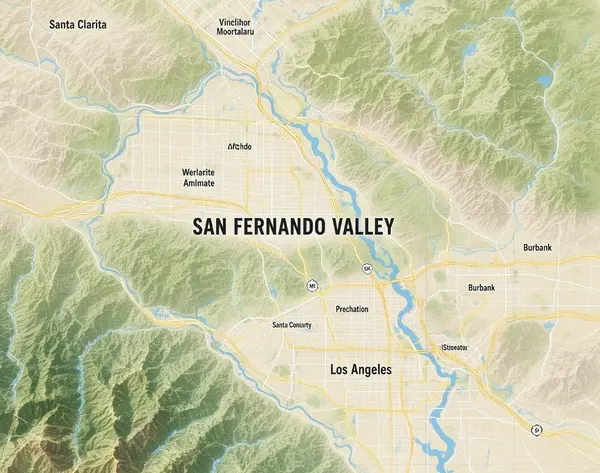
- San Fernando Valley (Reseda/Van Nuys): $1,800 – $2,300/month
- Westside (Culver City/Mar Vista): $2,800 – $3,500+/month
- Northeast LA (Highland Park/Eagle Rock): $2,400 – $3,000/month
The ROI Calculation
If you finance a $300,000 build with a HELOC or renovation loan at 7% interest, your monthly payment might be around $2,000. If that unit rents for $2,800, you are cash-flow positive immediately, plus you are paying down the principal and gaining tax benefits (depreciation).
A Warning on Airbnb (Short-Term Rentals)
Many homeowners dream of listing their ADU on Airbnb. Proceed with caution. Los Angeles City’s Home Sharing Ordinance generally prohibits using non-primary residences for short-term rentals. In most cases, ADUs built after 2017 cannot be used for short-term stays (under 30 days). Plan on a long-term tenant (12-month lease) or a mid-term tenant (traveling nurses/corporate housing, 30+ days) to stay compliant.
4. How to Maximize Value
To get top-tier rent and ensure the ADU adds resale value to your main home, follow these design tips:
- Privacy is King: Design the entrance away from your main house’s back door. Use fencing and landscaping to create a private patio for the tenant.
- Vaulted Ceilings: Since the footprint is small, high ceilings make the space feel double the size.
- In-Unit Laundry: This is the #1 amenity renters look for. Never build an ADU without a washer/dryer stack.
- Separate Meters: If possible, install a separate electrical sub-panel. It makes billing the tenant for utilities much easier and cleaner.
The Bottom Line
Building an ADU is a significant undertaking that requires navigating city bureaucracy and managing contractors. However, in a city with a housing shortage and high rents, it remains one of the safest and most effective ways to build wealth through real estate.
Categories
Recent Posts






GET MORE INFORMATION