New LA Landlord Rule: What Single-Family Home Owners Must Know
The "Hidden" Rule That Just Changed for L.A. Landlords (Yes, Even Single-Family Homes!)
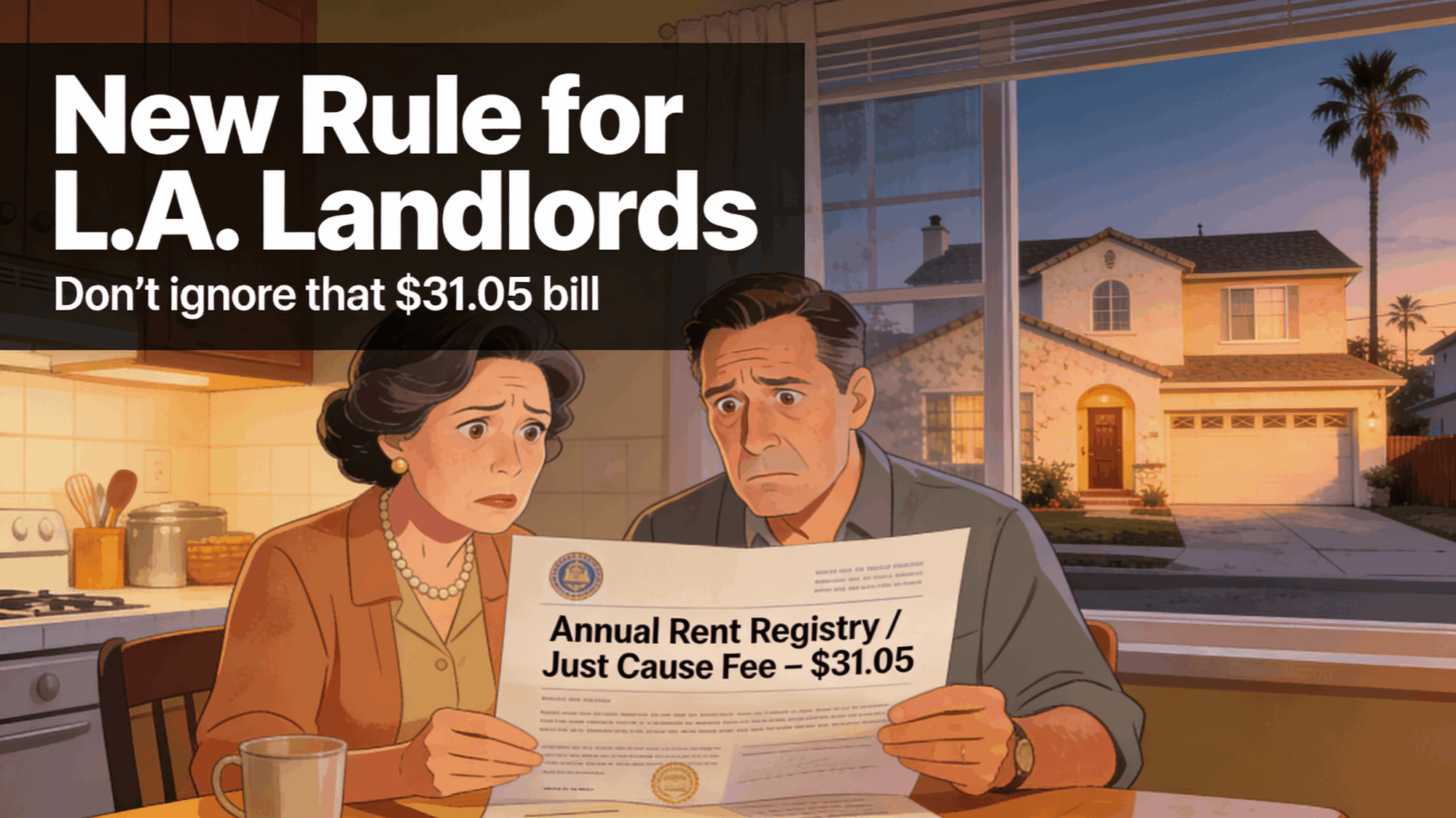
If you own a rental house in the City of Los Angeles, you probably just got a confusing bill for $31.05. Do not throw it away. If you’ve owned a rental house in Los Angeles for years, you’re probably used to a simple rule: "I’m not under Rent Control, so I don’t have to deal with the City." For decades, that was mostly true. Single-family homes and condos were generally exempt from the heavy paperwork that apartment buildings faced.
As of 2023, that era is over.
A new set of laws called the Just Cause Ordinance (JCO) has quietly expanded to cover almost every rental property in the City of Los Angeles—including your single-family home. Now, the enforcement bills are hitting mailboxes, and many "Mom & Pop" landlords are confused, angry, or mistakenly throwing them in the trash.
Here is exactly what is happening, why it matters, and what you need to do immediately to protect your investment.
The Just Cause Ordinance (JCO) is a Los Angeles city law effective January 27, 2023, that protects tenants by prohibiting evictions without a valid legal reason and requiring relocation payments for certain no-fault cases.
Key Purpose
It extends eviction safeguards to properties previously exempt from the Rent Stabilization Ordinance (RSO), such as single-family homes, condos, and buildings constructed after October 1978. Unlike RSO, JCO does not cap rent increases but mandates "just cause" for ending tenancies.
At-Fault Just Causes
Landlords may evict for tenant issues like non-payment of rent, lease violations, nuisance behavior, property damage, illegal use, or denying access for repairs.
No-Fault Just Causes
Permissible reasons include owner/family move-in, major renovations, demolition, government orders, or market withdrawal, but these require paying relocation assistance: typically one month's rent for small landlords (4 or fewer units) or two months/three for larger ones.
Registration Requirement
All covered rentals must register annually with LAHD for a $31.05 fee to enforce JCO compliance; exemptions apply to owner-occupied, vacant, or non-rental units but require prompt updates if status changes.
1. What is this "$31.05 JCO" Bill?
The City of Los Angeles now requires every residential rental unit to be registered with the Housing Department (LAHD).
Even though you are likely exempt from the Rent Stabilization Ordinance (RSO) (which caps how much you can raise the rent), you are NOT exempt from the Just Cause Ordinance (JCO).
The bill you received (likely for $31.05) is the administrative fee to fund this new program. It confirms that the City knows you have a rental and expects you to follow the new rules.
2. The "Trap": Why You Must Pay It
You might be tempted to ignore a $31 bill. Do not do this.
Under this ordinance, paying the fee and completing the Annual Rent Registry is now a legal requirement to operate your business. If you fail to register:
- You Cannot Collect Rent: Legally, a tenant can withhold rent if your property is not properly registered.
- You Cannot Evict: If you ever need to evict a tenant (even for non-payment), the court will likely throw out your case if you cannot produce a valid Registration Certificate.
- Penalties Triple: If you miss the February 28th deadline, the fees increase significantly with delinquent penalties.
3. The New Rules of the Road (It’s Not Just a Fee)
The fee is just the admission price. The real change is in how you manage your property. Under the JCO, single-family home landlords have lost the ability to end a tenancy just because a lease expired.
- "Just Cause" Evictions Only: You can no longer give a 30- or 60-day notice to vacate simply because you want the tenant out. You must have a legal "Just Cause" (like failure to pay rent or a lease violation).
- Relocation Assistance: If you want your house back for a "No-Fault" reason—such as moving back in yourself, moving in a family member, or selling the house vacant—you now have to pay the tenant to leave.
4. The "Mom & Pop" Silver Lining
There is one piece of good news. If you are a small landlord (owning 4 or fewer units plus one single-family home) and you own the property as an individual (not a corporation), you qualify for reduced relocation fees.
If you need to evict a tenant to move yourself or a family member in:
- Standard Corporation Fee: Approx. $10,000 - $26,000+.
- "Mom & Pop" Fee: Capped at roughly one month's rent.
Note: You must own the property as a natural person or family trust to qualify for this lower rate.
5. "I Don’t Have a Tenant Right Now!" (How to Handle the Bill)
If you received this bill but your property is vacant, occupied by family (rent-free), or is your own primary residence, you do not have to pay the fee. But you cannot just ignore the letter.
You must file an Exemption to clear the charge:
- Code T1 (Owner Occupied): You live there as your primary residence.
- Code T3 (No Rent Collected): The house is empty, or a family member lives there for free.
- Code S5 (Vacant): The property is vacant and secured.
You can file these exemptions easily at housingbill.lacity.org.
Property Status Changes
Landlords must notify the Los Angeles Housing Department (LAHD) immediately if an exempt property—such as owner-occupied (T1), no rent collected (T3), or vacant (S5)—becomes a rental unit.
Failure to update within 10 days triggers registration fees, potential penalties, and loss of legal protections like rent collection or eviction rights.
Submit the update via housingbill.lacity.org, pay the $31.05 Just Cause Ordinance fee, and obtain a new Registration Certificate to maintain compliance.
Summary Checklist for Landlords
- Check your mail for the "Annual Rent Registry" form.
- Register online at housingbill.lacity.org before the end of February.
- Pay the $31.05 fee if you have a paying tenant.
- File an Exemption (T1 or T3) if the property is not a rental.
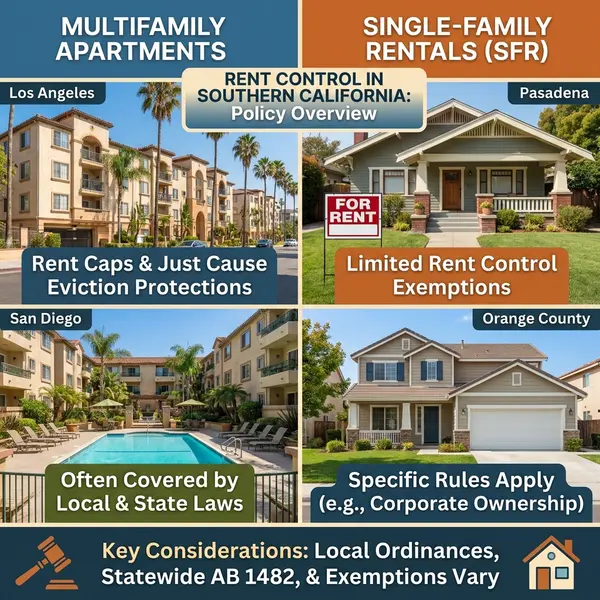
- Review your leases: Ensure you are compliant with AB 1482 and L.A. City rules before sending any notices to tenants.
Disclaimer: This information applies specifically to properties located within the City of Los Angeles. Rules for Ventura County, Santa Monica, West Hollywood, and unincorporated areas differ significantly. Always consult with a qualified attorney or your real estate professional before issuing notices to tenants.
Categories
Recent Posts





GET MORE INFORMATION