Measure ULA: Los Angeles’ "Mansion Tax" - Complete 2026 Guide
Measure ULA: Los Angeles’ “Mansion Tax” — Complete 2026 Guide
Measure ULA is a special real-property transfer tax imposed by the City of Los Angeles on qualifying transfers above specified value thresholds. Commonly called the “mansion tax,” it applies to more than luxury single-family homes: qualifying multifamily, commercial, mixed-use, and other real-property transfers within City of Los Angeles boundaries can also be affected.
Effective for transactions closing after June 30, 2026, Measure ULA applies an additional 4% or 5.5% tax to the entire value of a qualifying transfer—not merely the amount above the threshold. That makes pricing, net-proceeds analysis, and careful documentation especially important for transactions near $5.4 million and $10.9 million.finance.lacity
Important disclaimer: This article is for general educational and marketing purposes only. It is not legal, tax, accounting, escrow, or financial advice, and it does not create an attorney-client relationship. Measure ULA treatment depends on the specific facts, transaction documents, ownership structure, consideration, debt, exemptions, and current law. Consult a qualified California real-estate attorney and/or tax professional, along with your escrow officer, regarding your particular situation before making pricing, structuring, or closing decisions.
What Is Measure ULA?
Measure ULA—formally associated with the City’s Homelessness and Housing Solutions Tax—is an additional City of Los Angeles real-property transfer tax. It applies when the consideration or value of the real-property interest conveyed exceeds the applicable threshold.
It is important to distinguish ULA from a capital-gains tax:
-
ULA is not based on the seller’s profit, basis, or gain.
-
It is generally based on the value or consideration of the real-property interest conveyed.
-
It is charged in addition to the City’s existing base real-property transfer tax.
-
It is assessed on qualifying transfers within the City of Los Angeles, not throughout Los Angeles County.
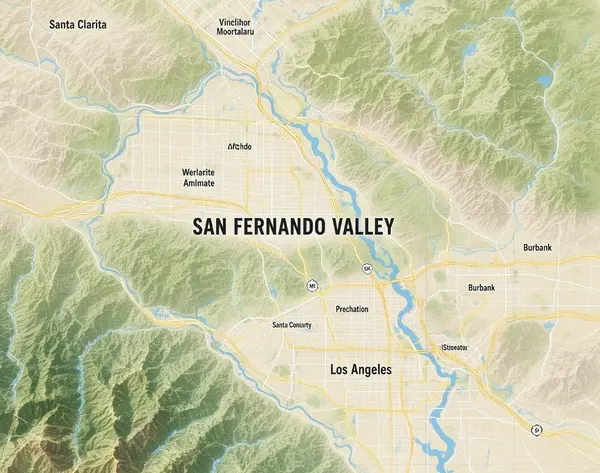
A home in Encino may be subject to ULA because Encino is within the City of Los Angeles. A comparable property in Beverly Hills, Santa Monica, Culver City, Calabasas, or an unincorporated part of Los Angeles County is governed by that jurisdiction’s rules—not Measure ULA.
Measure ULA took effect for qualifying conveyances occurring on or after April 1, 2023. Revenue is intended to support affordable-housing, tenant-protection, homelessness-prevention, and related programs.
2026 Rates and Thresholds
For transactions closing after June 30, 2026, the City’s thresholds are $5.4 million and $10.9 million. The ULA rate applies to the full value of the transfer once a threshold is crossed.
The rates above cover the City transfer-tax components. Los Angeles County documentary transfer tax is separate and can increase the total transfer-tax cost further.
The ULA pricing cliff
The ULA calculation creates a significant “cliff” rather than a marginal tax bracket.
For example, a $5,400,001 transaction can trigger roughly $216,000 in ULA tax alone, plus the City base transfer tax and applicable County documentary transfer tax. That is why sellers and buyers often focus as much on the seller’s after-tax net as on the headline purchase price.
The City base tax is calculated at $2.25 per $500 or fractional part of $500, so that portion is rounded up as applicable. ULA is percentage-based and is not calculated in $500 increments.finance.lacity
Who Pays—and What Counts?
In a typical arm’s-length residential sale, the seller commonly pays Measure ULA from proceeds through escrow. However, the purchase agreement and escrow instructions can allocate costs differently between the parties.
The practical point is that a buyer’s agreement to pay some or all of the tax may affect negotiations, but it does not eliminate the need for accurate reporting and payment of the applicable transfer taxes.
Gross value matters
For the City’s ordinary base transfer tax, the calculation generally uses the net value of the property conveyed, excluding certain liens or encumbrances remaining at the time of sale.
For ULA, however, the City uses gross value, including the value of liens or encumbrances remaining at the time of sale. Similarly, if a buyer assumes the seller’s loan, the assumed-loan amount is excluded from the base-tax calculation but included in the ULA calculation. (finance.lacity)
That distinction is especially relevant for:
-
Buyer loan assumptions
-
Seller-financed transactions
-
Properties transferred subject to existing debt
-
Entity or partnership-interest transfers
-
Distressed-property transactions
-
Deals with complex credits, side agreements, or nontraditional consideration
Reducing the cash proceeds received by a seller does not necessarily reduce the value used for ULA purposes.
Annual Threshold Adjustments
Measure ULA thresholds are adjusted annually using the Bureau of Labor Statistics Chained Consumer Price Index. New thresholds generally take effect each July 1.finance.lacity
For a property close to a threshold, timing can matter. A transaction that closes before versus after a July 1 adjustment may be evaluated against a different threshold. Sellers, buyers, agents, and escrow officers should confirm the applicable rate based on the actual transaction date—not simply the listing date or contract date.
Market Effects
Measure ULA has reshaped the economics of high-value transactions in Los Angeles, especially near the tax thresholds. Its effect is not uniform across neighborhoods or property types, but the practical impact is clear: properties near the ULA line require more deliberate pricing and net-proceeds planning.
Common market effects include:
-
Sellers becoming less willing to accept offers just above a threshold when ULA materially reduces their net proceeds.
-
Buyers underwriting a seller’s likely tax burden into offers and negotiations.
-
More price sensitivity and longer negotiation cycles for properties immediately above a threshold.
-
Greater use of seller net sheets before listing, countering, or accepting an offer.
-
More interest in properties outside City of Los Angeles limits among buyers concerned about eventual resale economics.
-
More complex analysis for multifamily, commercial, development, and mixed-use properties.
Research from UCLA’s Lewis Center concluded that Measure ULA has reduced multifamily housing production in Los Angeles, estimating a decline of at least 1,910 units annually, or about 18% relative to the 2020–2022 average, for projects with 20 or more units. Its later analysis cited a conservative estimate of a 31% decline in multifamily permitting among qualifying projects. Those findings concern multifamily development and should not be treated as a prediction for every individual residential resale.lewis.ucla
Pricing Near the Threshold
For a seller near $5.4 million or $10.9 million, the central question is often not “What is the highest possible price?” but rather:
“What price produces the best net result after Measure ULA, transfer taxes, commissions, credits, and other closing costs?”
A seller considering a $5.55 million offer, for example, should compare:
-
The seller’s estimated net at $5.55 million after 4% ULA.
-
The seller’s estimated net at a price below the applicable threshold.
-
The likelihood of closing at each price.
-
The buyer’s financing and appraisal constraints.
-
The market exposure and opportunity cost of continuing to seek a higher offer.
A seemingly small reduction in gross sale price can sometimes preserve a significantly higher seller net if it legitimately keeps the transaction below the threshold. That decision should be based on current market evidence, careful math, and professional advice—not on a generic rule.
Deal Structure and Compliance
Legitimate negotiation of a sale price below the ULA threshold is not inherently improper. But the City’s tax is based on the consideration or value of the real-property interest conveyed, and ULA uses gross value.
Parties should not assume that moving obligations outside the stated purchase price automatically lowers the amount subject to ULA. Transactions involving seller credits, buyer-paid expenses, assumed debt, commissions, personal-property allocations, separate agreements, entity interests, or other adjustments require fact-specific review.
The Office of Finance has a compliance process for identifying potential overpayments and underpayments. It may notify transaction parties of a potential discrepancy; overpayments can require a refund claim, while an underpayment may result in an invoice for the unpaid balance.finance.lacity
Practical guidance
-
Use a complete seller net sheet before listing and before accepting a counteroffer near a threshold.
-
Do not rely only on the stated deed amount or contract price when the transaction includes unusual consideration or debt.
-
Document the real economics of the transaction accurately.
-
Coordinate early with escrow, counsel, and tax advisers on a complex or threshold-sensitive sale.
-
Treat any strategy designed primarily to change ULA treatment as a legal and tax question—not merely a negotiation tactic.
Exemptions and Special Transfers
ULA does not apply to every transfer. The City recognizes exemptions for certain qualifying transferees and for transactions otherwise exempt from the City’s base real-property transfer tax under applicable local, state, or federal law.
Examples may include:
-
Certain qualified affordable-housing organizations.
-
Eligible community land trusts and limited-equity housing cooperatives.
-
Certain qualifying nonprofit organizations.
-
Government agencies and public entities.
-
Entities constitutionally exempt from the City’s taxation power.
-
Other transfers that qualify for exemption from the base transfer tax under applicable law.
The City’s exemption rules are technical. The existence of a trust, LLC, partnership, family relationship, divorce proceeding, nonprofit affiliation, or internal ownership transfer does not automatically establish an exemption.
For example, a transfer involving a trust or entity can raise separate questions about beneficial ownership, ownership percentages, consideration, property-tax reassessment, documentary transfer tax, and ULA treatment. Obtain legal and tax advice before assuming an exemption applies.
For properties located partly inside and partly outside City of Los Angeles boundaries, the City applies its transfer tax proportionally to the value of the real-property interest located within City boundaries. If a separate valuation is unavailable, the City may use a square-footage allocation.finance.lacity
Current Policy Status
As of August 2026, Measure ULA remains in effect, and the July 1, 2026 thresholds of $5.4 million and $10.9 million apply to transactions closing after June 30, 2026.
Policy debate remains active. In July 2026, the Los Angeles City Council declined to create a proposed 10-year exemption for newly constructed multifamily and mixed-use buildings. The Council also directed staff to explore a pilot tax-credit program that could reduce the ULA rate from 5.5% to 1.5% for eligible projects meeting specified criteria. That exploratory direction does not mean a general multifamily exemption is currently available.dailynews
The City also approved ballot language for voters to consider a limited, temporary Measure ULA exemption for certain original owners affected by the Pacific Palisades Fire. Because ballot measures, administrative guidance, litigation, and City programs can change, sellers and buyers should verify current rules before relying on any proposed exemption or reform.dailynews
Through April 30, 2026, Measure ULA had generated nearly $1.2 billion from 1,633 real-estate transactions, according to City Housing Department figures reported in July 2026.dailynews
Takeaways for Los Angeles Sellers
For sellers in Encino and elsewhere in the City of Los Angeles, Measure ULA should be part of the pricing strategy from the beginning—not an afterthought once an offer arrives.
-
Confirm the property is within City of Los Angeles boundaries.
-
Identify the ULA threshold in effect for the anticipated closing date.
-
Run seller-net scenarios both below and above the applicable threshold.
-
Factor in City base transfer tax, ULA, County transfer tax, commissions, payoff demands, credits, repairs, and other closing costs.
-
Be especially careful with assumed loans, seller carrybacks, liens, entity transfers, and other forms of non-cash consideration.
-
Do not assume a buyer-paid cost, side agreement, or lower recorded price automatically changes the ULA tax base.
-
Confirm any claimed exemption with escrow, a real-estate attorney, and a tax professional before closing.
-
Monitor annual July 1 threshold adjustments if the property is near a pricing line.
Final Thought
Measure ULA is now a core part of the City of Los Angeles transaction landscape for high-value real estate. Its largest effect is often not simply the tax itself, but the way it changes pricing psychology, negotiation leverage, buyer behavior, and seller net proceeds.
For properties comfortably above the threshold, ULA is generally a major closing cost that should be underwritten early. For properties near $5.4 million or $10.9 million, a disciplined pricing strategy and accurate tax analysis can make a substantial economic difference. The safest approach is straightforward: price based on market support, fully disclose and document the economics of the transaction, and obtain tailored advice from qualified legal and tax professionals before making ULA-driven structuring decisions.
Categories
Recent Posts








GET MORE INFORMATION