The LA Landlord's Survival Guide to LARSO & JCO Rules (2026)
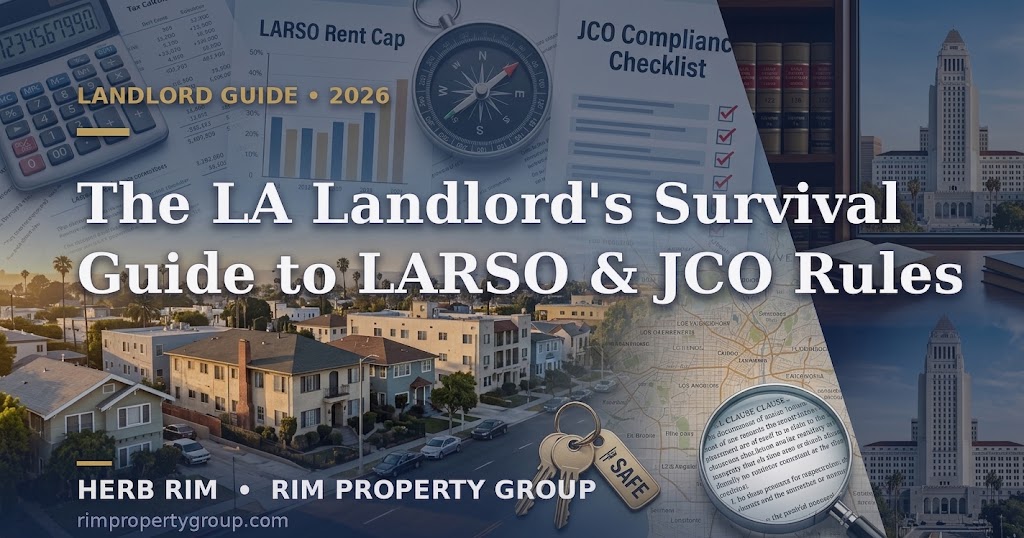 If you own a rental in the City of Los Angeles — even a single-family home or condo — two local ordinances now shape almost everything you can do: the Rent Stabilization Ordinance (LARSO) and the Just Cause for Eviction Ordinance (JCO). Here is the plain-English version for 2026.
LARSO vs. JCO: Which One Applies to Your Property?
LARSO generally covers multi-unit rental properties in the City of LA built on or before October 1, 1978. It controls how much you can raise rent each year.
The JCO covers most rentals that are NOT under LARSO — including many single-family homes, condos, and newer buildings. It does not cap rent, but it limits the reasons you can end a tenancy once a tenant has lived in the home for six months, and it requires relocation assistance for no-fault evictions.
In other words: owning a single house you rent out does not exempt you from LA's tenant-protection framework. It just puts you under a different ordinance.
The 2026 LARSO Rent Increase Rules
Through June 30, 2026, the maximum annual rent increase for LARSO units is 3%.
Starting July 1, 2026, the City moves to a new formula: 90% of the Consumer Price Index, with a floor of 1% and a ceiling of 4% (down from the old 8% maximum).
Two other changes took effect on February 2, 2026: landlords can no longer add the extra percentage for utilities (the old +1% for gas or electric), and the additional 10% increase for a new dependent joining the household is gone.
The JCO Fee — and How to Get Exempted
LAHD now bills owners of non-RSO rental properties a Just Cause Enforcement Fee of $31.05 per unit, per year. This is the confusing bill many owners of single-family homes received.
Key point: if your home is owner-occupied or simply not rented, you can claim an exemption — but you must request it every year through LAHD's billing portal (indicating "Owner-Occupied" or "Not Rented"). Do not ignore the bill; unresolved balances can follow the property.
What "Just Cause" Actually Means When You Want Your Property Back
Under the JCO, after six months (or the first lease expiration), you can only terminate a tenancy for an at-fault reason (like non-payment) or a no-fault reason (like owner move-in or removal from the rental market). No-fault terminations trigger relocation assistance, which can run from one month of rent to considerably more depending on the situation. If you are thinking of selling a rented home, plan this out before you list.
The Bottom Line for LA Owners
Compliance in 2026 is mostly about three things: registering (or exempting) your property with LAHD, respecting the current rent caps, and never serving a termination notice without confirming the just-cause rules first. The costs of getting it wrong — refunds, penalties, a blown escrow — far exceed the effort of doing it right.
Own a rental in LA and wondering whether keeping it or selling it makes more sense right now? I help Valley and Westside owners run those numbers every week. Get a free valuation of your property here or reach out for a private consultation.
This article is general information, not legal advice. Verify current rules with the Los Angeles Housing Department (LAHD) or a landlord-tenant attorney.
Categories
Recent Posts






GET MORE INFORMATION